Software

Video

Das war das Eplan Usermeeting 2026 – 30 Jahre #EplanAustria

Das Eplan Usermeeting 2026 brachte Anwender, Partner und Experten aus der Engineering-Welt zusammen. In diesem Recap haben wir die schönsten Momente des Tages für Sie zusammengefasst. Vielen Dank für Ihre Teilnahme! ▬▬ Social Media ▬▬▬▬▬ ► Website:    www.eplan.com ► LinkedIn:   / eplan-software-service   ► Facebook: / eplande     Bleiben Sie stets auf dem Laufenden rund um Eplan - melden Sie sich am besten gleich hier zum Newsletter an: https://bit.ly/NewsletterEplanAustria     ▬▬ Über Eplan ▬▬▬▬▬ Eplan bietet Software und Service rund um das Engineering in den Bereichen Elektrotechnik, Automatisierung und Mechatronik. Das Unternehmen entwickelt eine der weltweit führenden Softwarelösungen für den Maschinen-, Anlagen- und Schaltschrankbau. Eplan ist zudem der ideale Partner, um herausfordernde Engineering-Prozesse zu vereinfachen.   Standardisierte und individuelle ERP- und PLM/PDM-Schnittstellen sichern durchgängige Daten entlang der gesamten Wertschöpfungskette. Mit Eplan zu arbeiten bedeutet uneingeschränkte Kommunikation über alle Engineering-Disziplinen hinweg. Egal ob kleine oder große Unternehmen: Kunden können so ihre Expertise effizienter einsetzen. Weltweit werden 73.100 Kunden unterstützt. Eplan will weiter mit Kunden und Partnern wachsen und treibt die Integration und Automatisierung im Engineering voran. Im Rahmen des Eplan Partner Networks werden gemeinsam mit Partnern offene Schnittstellen und nahtlose Integrationen realisiert. „Efficient Engineering“ ist die Devise.   Eplan wurde 1984 gegründet und ist Teil der inhabergeführten Friedhelm Loh Group. Die Unternehmensgruppe ist mit 13 Produktionsstätten und 95 Tochtergesellschaften international erfolgreich. Das Familienunternehmen beschäftigt 12.600 Mitarbeiter und erzielte im Jahr 2024 einen Umsatz von 3,1 Milliarden Euro. 2023 wurde die Friedhelm Loh Group als "Best Place to Learn" und "Arbeitgeber der Zukunft" ausgezeichnet.   Weitere Informationen finden Sie unter: www.eplan.com     #Eplan #ElectricalEngineering #AutomationTechnology #CAE #EngineeringSoftware #EplanElectricP8 #EplanProPanel #PanelBuilding #ControlCabinetDesign #Industry40 #EngineeringProcessOptimization #SmartWiring #EplanEducation

Eplan

Video

ARC Advisory Group - COPA-DATA interview in Barcelona - 2026 - IT/OT convergence

0:00 Introduction and Speaker Introductions 1:10 Overview of COPA-DATA 2:32 Customer Use Case: Almirall 4:37 Future Trends in Manufacturing 5:46 Reflections on the Forum Join Jan Burian, Research Director at @ARCadvisory, and Jacob Trummer, Team Lead Global Business Development | Manufacturing at COPA-DATA, as they delve into the future of industrial automation and digitalization at a key advisory forum. This insightful discussion highlights the vital role of COPA-DATA's zenon software platform in transforming manufacturing processes and bridging the gap between IT and OT. In this video, you'll discover: - Introduction to COPA-DATA and zenon: Learn about COPA-DATA's innovative approach as an independent software manufacturer in the industrial automation sector, and how zenon connects and optimizes industrial processes across various sectors, including manufacturing and energy. - The Importance of Digitalization: Understand the critical themes of digital transformation, IT/OT convergence, and the challenges faced by companies like Almirall in implementing integrated, digital factories. - Real-World Use Cases: Explore how zenon can effectively address common challenges within pharmaceutical manufacturing, including integration with legacy systems, ensuring data integrity, and enhancing operational efficiency. - Future Trends in Manufacturing: Gain insights into how software-defined automation, AI, and sustainability are shaping the future of the industry, emphasizing the need for adaptable solutions. ✅ Key takeaways from this discussion include: - The relevance of zenon in modern industrial environments and its ability to facilitate seamless digital transformation. - Practical strategies for overcoming barriers in achieving connected, digitized operations. - Insights into the collaborative nature of industry forums and knowledge exchange among professionals. Join us for a thought-provoking session that empowers you to navigate the complexities of industrial automation and prepares your organization for the future. Don't miss this opportunity to enhance your understanding of how COPA-DATA and zenon are setting the standard for digital transformation in the manufacturing landscape. Read more about COPA-DATA ➡️ https://hubs.ly/Q04z76bJ0

Copa Data

Video

Optimistic Outlook Ep. 104 - Waste Is a Design Flaw: How Industry Can Turn Waste Into Value

Most conversations about the circular economy stay at altitude. Materials in use, value retained, waste designed out. All true, and none of it tells you what actually has to change on a Tuesday morning at a working facility. The idea itself is straightforward: instead of continually extracting resources, using them, and throwing them away, what if we could keep more of those materials in use? For industry, that can mean less waste to manage, fewer resources to buy, more resilient supply chains—and new value from materials that once represented only a cost. In this episode of the Optimistic Outlook, Eryn Devola, Global Head of Sustainability for Siemens Digital Industries, sits down with Paul Coyne, CCO of Envetec to bring that idea down to earth. One company. One waste stream. What it cost before, what it costs now, and whoinside the customer organization had to sign off on doing it differently. The conversation gets at a claim that sounds simple and turns out not to be: waste is a design flaw. If a material leaving a facility has no value, that is not necessarily inevitable. It is the result of decisions made earlier, usually by people who were never asked to think about the end of the line. Changing that requires more than better waste disposal. It means designing processes differently, understanding where materials go, and using technology to identify opportunities to keep them in circulation. The payoff can be both environmental and economic: reducing waste while getting more value from the resources industry already uses.

Siemens

Video

Shaping the future of semiconductors with the digital twin

Bringing a new chip design to market is not simply a matter of designing the chip then sending it to be fabricated. Building fabs is, itself, a costly and highly complex process and, even once that is completed, it will still take further time to dial in the chip fabrication process to achieve good yields. All these factors contribute to the costs, risks and challenges associated with bringing new, cutting-edge chip designs to market. So, across the chip design process, adopting the latest in digital technology isn’t just a benefit – it’s a imperative. In this episode, host Conor Peick is joined by Katherina Westrich, Global VP of Electronics and Semiconductors at Siemens, to explore how the needs of the semiconductor industry can be served by the increasing adoption of digital twin and artificial intelligence technologies and how that will shape the industry going forward. In the episode you’ll learn about: (0:44) How the semiconductor industry must adapt in the future (2:42) The importance of the digital twin in chip design (5:16) AI accelerates the semiconductor industry (6:23) Reducing ramp up time (11:05) Building new fabs vs. new chips (12:25) How to reach yield quicker   About the voices: Katharina Westrich is Global VP of Electronics and Semiconductors at Siemens. In this role Katharina heads a team focused on unlocking the potential of resilient, smart, and sustainable semiconductor and electronics manufacturing across the entire value chain. Conor Peick is a Marketing Professional creating forward-looking content for the Thought Leadership team at Siemens Digital Industries Software. Conor collaborates with industry experts and executives to produce impactful content exploring the challenges companies face and the technologies that can provide solutions.

Siemens

Video

Rethinking Predictive Maintenance: The Signals Hiding in Plain Sight

Welcome to the Trend Detection podcast, brought to you by Senseye Predictive Maintenance – which gives you visibility and insights into all your assets, from single machines to full plants to help you reduce downtime, increase knowledge sharing and accelerate digital transformation across your organization. This is the second episode in Rethinking Predictive Maintenance, a Trend Detection podcast series exploring the people, data and decisions behind successful predictive maintenance. Host Niall Sullivan is joined by Tom Jacques to explore how an International Tech Talents project turned existing PLC status lights into a new source of machine data. Using a camera, the team monitored the lights controlling automated railway points and combined the information with Senseye Predictive Maintenance to identify changing behaviour, without adding sensors or altering the existing control logic. Tom discusses what the demonstrator could mean for manufacturers whose machines may already display useful information that is not currently being captured as data. He also explains where non-intrusive monitoring could be valuable, what further testing would be required for operational use and how collaboration across Siemens helped transform the original idea. In this episode, you’ll learn: • How a camera turned existing PLC status lights into usable data • How the demonstrator identified changes in machine behaviour • Why non-intrusive monitoring could help when systems are difficult to modify • Why manufacturers should consider the information their machines already display • How cross-business collaboration changed the direction of the project Listen to discover why some of the machine signals manufacturers need may already be hiding in plain sight. You can find out more about how Senseye Predictive Maintenance can reduce unplanned downtime and contribute towards improved sustainability within your manufacturing plants, by visiting: www.siemens.com/senseye-predictive-maintenance (http://www.siemens.com/senseye-predictive-maintenance)

Siemens

Video

Flexibility in process industries might mean looking at discrete manufacturers

Simply embracing flexibility and resilience is not an option, it needs to happen without compromising on efficiency. And to do that business are going to have to implement digitalization in their workflows to keep a balance on their priorities. And making that happen, businesses in the process industries might want to look at the solutions others are finding to implement flexibility into their own processes. To wrap up our deep dive on the future of the process industries, we brought back Rebecca Vangenechten to talk with Mark Hindsbo a third episode of Siemens’ Future Ready Podcast. In this episode you’ll learn about: (00:00) Introduction (02:20) Similar solutions across industries (07:29) AI needs determinism About the voices: Mark Hindsbo joined Siemens in 2025 as Head of Operations Software. He is leading a team to build an integrated and modular industrial operations software suite that allows customers to design, engineer, and operate their factories, data centers, or plants – powered by agentic AI and digital twins. His extensive career includes leadership roles at Ansys, Parallels, and Microsoft, alongside experiences at The Boston Consulting Group, Novo Nordisk, and CERN. Mark is also an Adjunct Professor at Carnegie Mellon University. Born and educated in Denmark, he holds an M.S. in Applied Physics & Mathematics from the Technical University of Denmark. Rebecca Vangenechten has been the Head of Automation and Engineering for Process Automation at Siemens since 2023 – helping customers and partners through the entire plant lifecycle with engineering, consulting and modernization. But her background in Biomedical Sciences and Endocrinology is perfect for understanding the challenges of process industries. Nick Finberg is a technical marketing writer for Software-Defined Everything, with a background in Nuclear Engineering. He has worked with experts to cover many industries and topics including Automotive, Battery, sustainability, and systems engineering.

Siemens

Video

What a green energy ecosystem actually looks like

The world’s energy ecosystem is heading towards a transition. Environmental realities, supply chain pressures, public opinion and growing regulations are shifting the industry away from petroleum to greener power sources. But understanding what this ecosystem will look like, and how to prepare, can be a challenge.   In this podcast, Christian Gueckel, Head of Verticals Chemicals and Energy at Siemens Digital Industry will discuss industry’s vision of a green energy ecosystem. Along the way he will discuss everything from green electrons to energy carriers like green hydrogen.   In this podcast you will learn about: (00:30) – The big shifts in the energy industry (05:56) – How new and existing technologies will support the transitions (12:08) – What needs to happen for there to be a secure supply chain for energy Conor Peick – Moderator Conor Peick is a Marketing Professional helping to create forward-looking content for the Thought Leadership team at Siemens Digital Industries Software. Conor collaborates with seasoned industry experts and executives to produce podcasts, articles, blogs, and other forms of content focused on the trends and challenges companies face in the future, and the technologies that may provide solutions. Connect with Conor on LinkedIn (https://www.linkedin.com/in/conor-peick-119ab2143/)   Christian Gueckel – Head of Verticals Chemicals and Energy at Siemens Digital Industries Christian Gueckel is the Head of Vertical Chemicals and Energy at Siemens Digital Industries. In this role, he is responsible for sales operations within the vertical. Prior to joining Siemens, Gueckel spent more than ten years at the specialty chemicals company Clariant in various management positions, including Head of Strategy and Marketing. He also earned his PhD in inorganic chemistry from the Ludwig Maximilian University of Munich. Connect with Christian on LinkedIn (https://www.linkedin.com/in/christian-gueckel-0259a5110/)

Siemens

Video

Fit4Blue Retrofit at İGSAŞ: Upgrading Switchgear Without Downtime

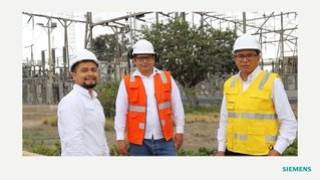
See how İGSAŞ, a leading Turkish fertilizer producer, upgraded aging medium-voltage switchgear using the Siemens Fit4Blue Retrofit solution instead of replacing its electrical infrastructure entirely. This case study is relevant for plant engineers, maintenance managers, and decision-makers in process industries evaluating switchgear modernization options. Learn more about Fit4Blue Retrofit Solutions: https://sie.ag/4cdRnr Founded in 1971 and privatized in 2004 under Yıldızlar Yatırım Holding, İGSAŞ operates Türkiye's only urea plant along with additional production sites, reaching a combined output of around 2 million tons with close to 1,000 employees. When the medium-voltage panels at the company's Kocaeli facility needed renewal, Siemens Türkiye proposed Fit4Blue as a faster, lower-cost, and less disruptive alternative to a full switchgear replacement. The video walks through how Fit4Blue works: replacing end-of-life circuit breakers with new-generation units while reusing the existing switchgear infrastructure. Representatives from Siemens and İGSAŞ describe how the retrofit added arc-flash protection and digital monitoring, extended equipment lifespan, reduced maintenance needs, and brought the installation up to current safety standards while supporting integration with modern grids. The İGSAŞ team also shares the measurable sustainability impact of the project. Choosing Fit4Blue over a full replacement helped avoid more than 60 tons of CO2 emissions, and the renewed circuit breakers are expected to prevent a further 30-plus tons of CO2 emissions over the next ten years by eliminating energy losses. Closing out the video, İGSAŞ explains why it chose Siemens Türkiye as its retrofit partner, pointing to Siemens' technological capabilities, service network, and technical expertise, built on a partnership between Siemens and İGSAŞ/Yıldızlar Yatırım Holding spanning many years across the group's fertilizer operations.

Siemens

Video

Accelerating MES Migration through IT/OT integration platform and collaborative approaches

0:00 Introduction to Almirall 0:12 Company Overview and Global Presence 0:30 Focus on Dermatology 0:58 Factory Operations and Challenges 1:42 Challenges with Legacy Systems 2:44 Developing a Vision for Integration 4:08 Implementing the Integrated Factory Model 5:24 Addressing Operational Gaps 7:00 Building Blocks for Synchronization 8:24 Technology Selection and Strategy 13:29 Embracing Low-Code Solutions 13:57 Importance of Partners and Change Management 14:47 MSI Protocol and Industry Collaborations 16:04 Case Studies: Implementing EBR and zenon Batch 17:22 Overcoming Equipment Challenges with HMI and MSI 19:20 Quick Integration Success in Germany 20:40 Migrating Legacy Systems: A Transformational Approach 22:44 The AI Challenge: Converting Old Recipes 23:44 IT/OT Convergence: A Humorous Perspective In this video, Francesc Luque Naqui, MES/MOM Director at Almirall, explains how the company is transforming pharmaceutical manufacturing by modernizing legacy systems while maintaining a strong focus on patient care and operational excellence in dermatology. Operating in more than 100 countries with multiple manufacturing sites, Almirall faces complex challenges in industrial automation, IT/OT convergence, and factory integration. Key takeaways include: ▪️ The critical role of planning in digital transformation, blending adult responsibility with childlike passion. ▪️ Almirall's vision for a fully integrated production environment that embraces the opportunities of digitalization. ▪️ Practical strategies for overcoming challenges associated with legacy systems, including the development of modular building blocks for seamless integration. ▪️ Real-world examples showcasing successful implementations, including a rapid integration project and innovative solutions leveraging the zenon software platform. This video is a must-watch for professionals in the life sciences and pharmaceuticals looking to navigate the complexities of modern industrial automation. Bridge the gap between OT and IT with the zenon Automation Integration Layer ➡️ https://hubs.ly/Q04w49Fr0

Copa Data